What Is It?
When I was a doctoral student, I could not answer this question to my satisfaction. The professor, Aaron Klein, asked the "Other People's Money" class if we knew what money was. Most of us had the "here he goes with the obvious" look. He wiped that look off our faces quickly. As people started answering, it became clear that we could point to examples of money but could not define it in a way everyone in the room could accept. It was probably this moment that cemented my singular focus on the subject.
Some of you probably think, "Does it matter what it is if you know it when you see it?" Meh. What money is, is kind of important because of what it can do, offer, and become. I could wax poetic here, and I might, because we just straight up need money for everything. It can buy time, health, happiness, convenience, comfort, and you can go on.
The school your child goes to depends on the area you can afford to live in (a battle I know all too well at the moment), which depends on home values, which depends on what mortgage you can afford, which depends on how much you make, which depends on what job you have, which depends on...what schools you went to, which determines what you get paid, which determines where you can afford to live. I think you get it.
Taking it back to middle school social studies, one of the first serious political crises was not about freedom per se. Shays' Rebellion in 1786–87 was when the Massachusetts farmers took up arms against a sea of debt troubles while the courts kept on coming for their land. From this moment, among others, the framers decided to give Congress, and only Congress, the power to coin money and borrow on credit, aka Article I, Sections 8 and 10 of the United States Constitution.
And as of writing this, Congress paused taking up a bill that would further "clarify" digital assets, some of which serve as something close to money, or some form thereof, and regulate them. A decision that would restructure the form and movement of value. If it ain't all about the Benjamins, I do not know what it is all about.
Money
And Its Levels
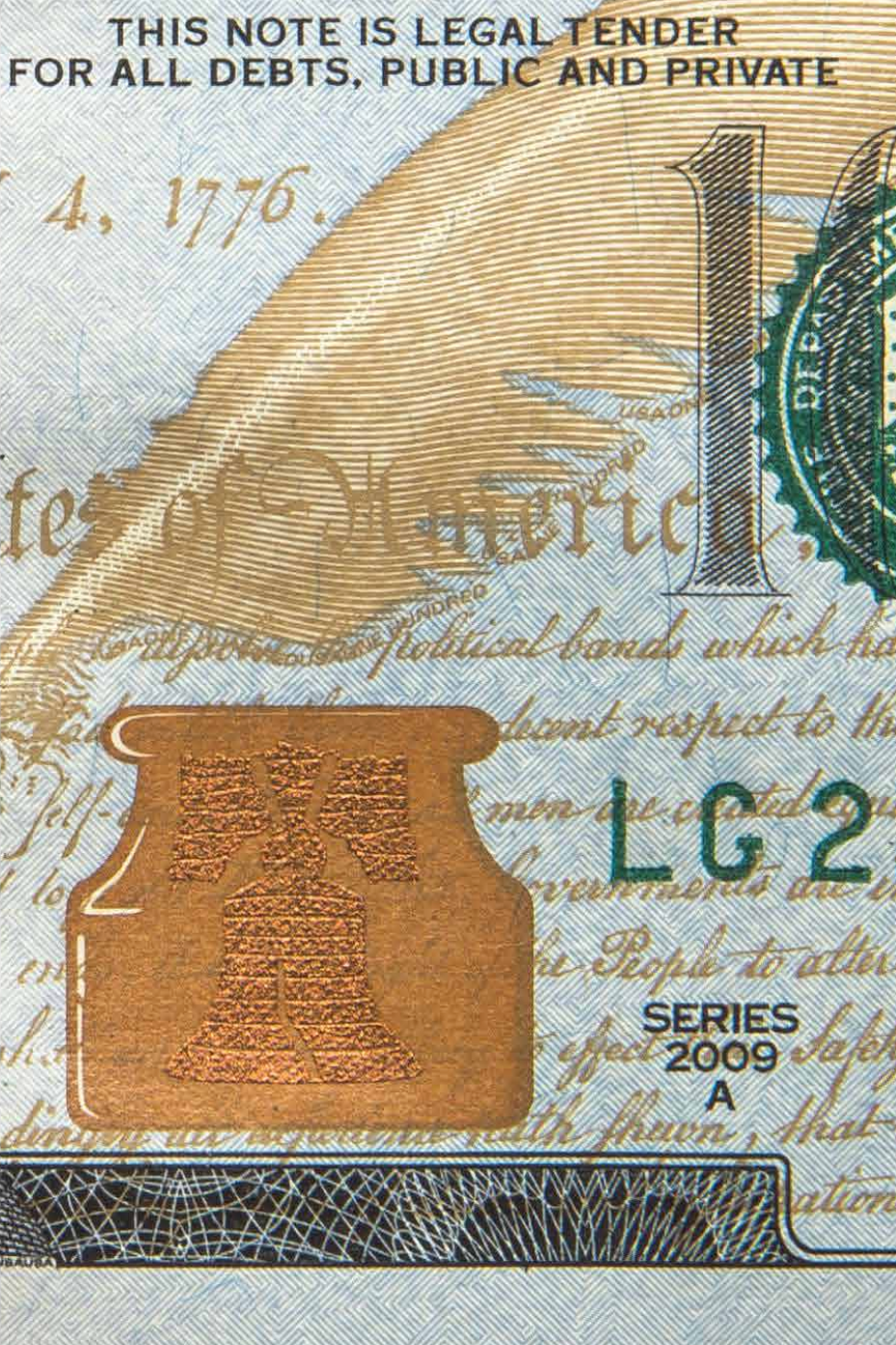
Here is my attempt to straight up define money. It is what we agree measures value, holds the value, and transfers and settles what you owe or are owed. The instrument—the thing that does all this—is money to the degree that it satisfies those things; in other words, "moneyness." So money is not the object itself, say, cash or the dollar bill (we obviously shorthand it to "a dollar," but the dollar is not an object; it's the unit we count in). Because there could come a day when the dollar no longer serves as money because it does not do all the things I just explained. Cash, the dollar bill, bread, paper, P's, whatever you call it, are money instruments, and the ones we very readily accept, use, and need.
Sidebar. From this definition, one can see why many fields and disciplines debate money. For economics, it facilitates exchange upon which all economics more or less rests. As for law, money is the legally recognizable means of the exchange and that which settles a debt. In terms of sociology, money rests on a mutual and impersonal trust. And you will see why both law and sociology are necessary to have and believe, if we are all to take as fact these exchanges are worth something and will maintain worth.
Now back to money. You can think of there being levels of money, with each a promise to deliver the level above. Once each level is satisfied and you cannot go any further, you have come to the final boss of money. And that, we all can agree, is cash. To be specific, it is central bank money.
Central Bank Money Rules Everything Around Me
We should tackle the "central bank" bit of this because it is, for lack of a better word, central, when thinking about what money is.
It is really what it sounds like. It is the central bank. The bank that all other banks must bank with (a small bank might need to reach the central bank via a larger one). That means, just as I have an account at Chase Bank, Chase Bank has an account at the Board of Governors of the Federal Reserve System, or the Federal Reserve, or just the Fed, the United States' central bank. And to be more specific, our central bank is a system because the Fed is made up of twelve reserve banks. Chase actually holds an account at the Reserve Bank—let's say in this case it is the Federal Reserve Bank of New York—where it is based.
The Fed is the one place in the economy that never has to go anywhere else for "money." That is, to pay what we owe—whether "we" is an individual or a bank—we have to get dollars somehow. But the Fed makes money. And there are two forms of this. The first, and lesser-known, is money moving between Chase and Wells Fargo when you pay someone who banks there. Those are reserve (like the Reserve Bank) balances. The other is physical cash, the note or paper—the greenback. These together make up central bank money. So how does this get to us since we hold accounts at banks rather than the central bank?
Commercial Bank Money Rules Everything Around Me
Now, at this point you are probably like, "Central bank and commercial bank money? These are different? Can you just be straight with me about what money is?" Or better yet, If physical cash is central bank money, why do I get it from Chase? It's not like I ever go to the Fed."
You would think, as I did not so long ago, that money simply passed through from the Fed to Chase to me. To clear up any confusion, you need to remember that money is an "IOU." Whose "promise" you hold determines the money you hold. Chase owes you money if you bank with Chase, just as the Fed owes Chase money because it banks with them. For instance, I have $50 at Chase as seen on my Chase application. That is Chase owing me money because I have an account with them and have deposited my money there. Chase has a different $50 in its master account at the Fed. Those $50s are not linked somehow. I cannot get $50 from the Fed, and when I take $50 from Chase, Chase does not go and take that from the Fed and give it to me.
Aha! I said earlier that physical cash is central bank money and so when I go to the Chase automated teller machine, I pull out cold cash— that is central bank money. But dear friend, where you get your money and who owes you money are not always one and the same. When I withdrew $50 in cash, I exchanged what promise I held. The cash in my hand is the paper IOU from the Fed. Chase has a lot of this on hand to satisfy its customers.
Now, you might think that I think I'm slick and this is getting frustrating. Am I saying that the money you see in your Chase app is not cash? Is it money, yes or no? Yes, it is money. Commercial bank money is the money you have given to the bank, some say lend, as a deposit (although not all commercial bank money was lent to it). Once again, these are not one-for-one with reserves. Because when you want to buy a house and borrow $500,000 from Chase, the bank does not hit the Fed to increase its balances by $500,000. Instead, it makes computer entries on its ledger where, on one side of the balance sheet, the loan Chase owns is an asset, while the same amount on the other side is a deposit, a liability that Chase owes you, aka the $500,000 it gives you to purchase the home.
To further drive the point home that the Fed's money is the money look at it this way. The Fed cannot run out of its own promise, but of course Chase can.
Near Money Rules Everything Around Me
Near money is an apt descriptor. These are things you might use as money, to some extent, but in effect must be turned into a bank balance before you can use them to pay for most things. This phenomenon is easier to explain when you understand that this type of "promise" comes from a nonbank (typically still a financial firm or business).
For example, your Venmo balance. You can send that to anyone on Venmo, but for them to use it outside of Venmo, they usually need to transfer it back into their bank. That is why it's "nearly money." It is close enough to count as your money, but two steps away from cold, hard cash (and a step away from bank deposits) accepted anywhere by anyone.
A newer example of near money I like to use is the stablecoin. Not yet tested, but on the cutting edge of this money discussion. It is a cryptographic token, essentially an entry or record (just like your bank account is at Chase) on a blockchain, which is the record book that is managed not by a bank but by thousands of computers working together to maintain one source. You can send anyone a stablecoin who has a crypto wallet (akin to a bank account but for crypto).
The USD coin, or USDC, issued and offered by Circle, is an example of a stablecoin in the U.S. You go to an exchange like Coinbase, somewhere to use money in your bank account to buy crypto. The exchange transfers a dollar to Circle, and it deposits $1 of USDC, a token, into your crypto wallet. Now Circle is promising you your money back when you return the USDC (but in practice, you would usually sell it back on the exchange).
The older example I also like to use is the money market fund. So you open a brokerage account, which you should think of as an investment account—a bank account but for investing. The investment company takes the "cash" and immediately sweeps it into the money market the brokerage picks (for example, at Vanguard, that could be the Vanguard Federal Money Market Fund or VMFXX).
So you no longer own a bank deposit or hold a bank claim. Instead, you own a share in a fund, a pool of money, and you hold the fund's promise (really, it's a best effort) to keep each share at least $1.
Now, with $1,000 in your brokerage account, you can invest. You can buy an index fund, a big pool of money that buys every stock on a list like the S&P 500, which is just the 500 biggest companies in the U.S. That way, you own a small piece of each of these 500 companies at once. But this last part about the index fund is blurring the line a bit. If something is made and accepted as worth a dollar, all day, every day, that is close to money. If the price goes up and down, not staying at a dollar, it is an investment rather than money (the subject of another entry).
Remind Me, What Is Money?
Before crossing the line into what money can buy, let us recap. Money is a promise that we agree (or accept) will settle what someone owes. So then of course, the Fed's promise to pay (that Federal Reserve note up above) is the ultimate money and it takes the form of cash and bank reserves. Right below that is the bank's promise to pay you Fed notes, aka the bank deposit—your checking or savings account. Then there are the accounts or balances at nonbanks that can hold your bank money dollar for dollar and this is near money.
Discussion